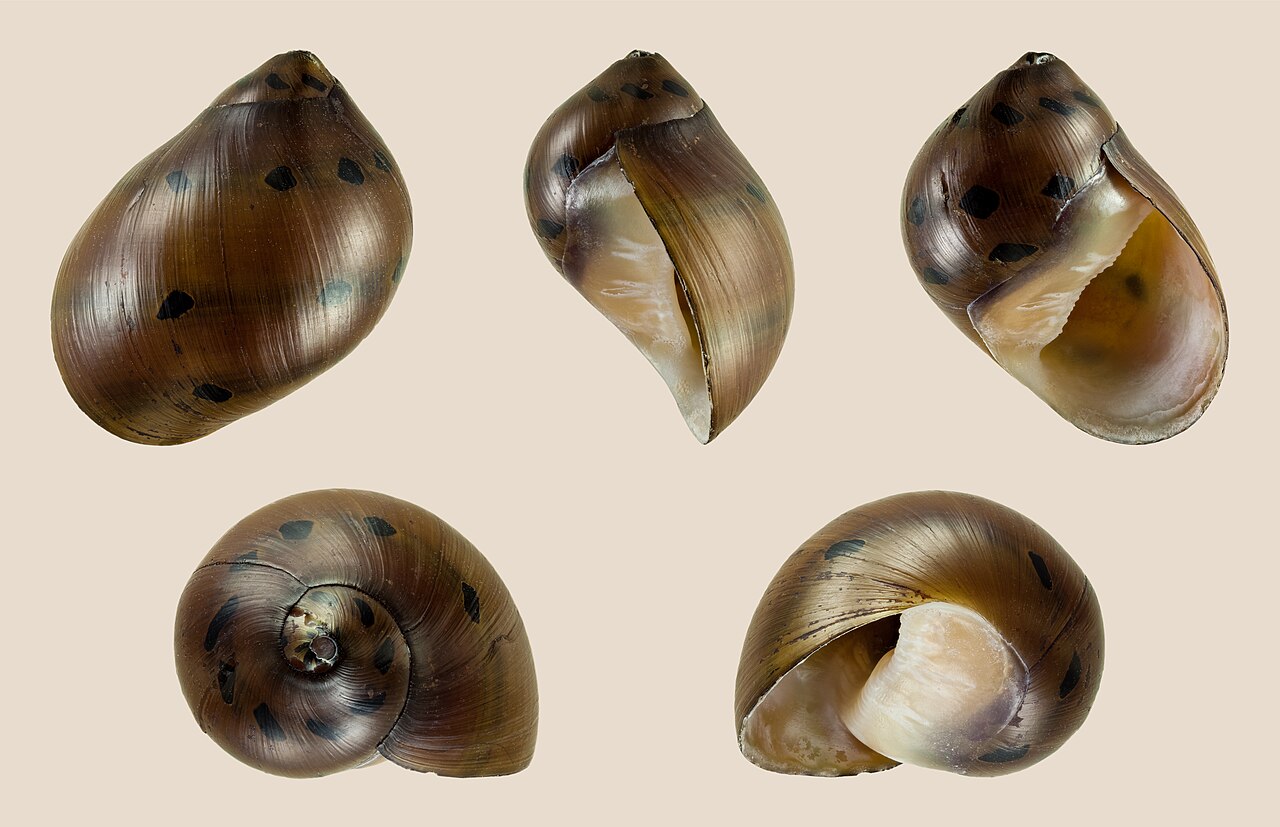
Red Spot Nerite Snail
Orange-red shells flecked in black — the showpiece of the nerite family.
Warm orange to red shells with crisp black markings, and the same tireless algae grazing every nerite brings. Red spots stand out hardest against dark substrate and green plants, and they work glass, rock, and driftwood without ever damaging a leaf.
Reference image — cultivar may vary.Imagen de referencia — el cultivar puede variar.
Photo: Foto: Llez, CC BY-SA 3.0, via Wikimedia Commons
Local pickup by appointment · Venmo · CashApp · Zelle · PayPal · Cash — Recogida local con cita previa · Venmo · CashApp · Zelle · PayPal · Efectivo — message us on WhatsAppescríbenos por WhatsApp
What it needs to thrive
- Lighting
- Any — a little algae growth on glass and hardscape keeps them grazing.
- Flow
- Low to moderate. A tight-fitting lid or lower waterline keeps wanderers in the tank.
- Feeding
- Algae and biofilm grazers. Supplement with algae wafers or blanched zucchini in clean, low-algae aquariums.
- Temperament
- Completely peaceful and plant-safe. Copper-sensitive — never dose copper medications.
- Difficulty
- Beginner
- Ideal Tank Size
- 5 gallons and up per snail, fully cycled.
- Water Parameters
- 72–80°F · pH 7.0–8.2 · GH 6–12 · KH 3–8 · copper-free · calcium-rich water for shell health
Anywhere in a cycled planted tank. Attractive enough to keep as a display animal, not just a cleaner.
Peaceful, plant-safe, shrimp-safe. Copper-sensitive.
Quarantine, dip, and acclimation
Quarantine
Hold all new fish in a bare-bottom 10–20 gallon QT for a minimum of 4 weeks. Observe for flashing, clamped fins, white spots, or breathing changes. Treat preventatively with copper (1.75–2.5 ppm chelated) or tank-transfer method for ich, plus a praziquantel course for flukes. Invertebrates and corals skip QT but go through dip and observation instead.
Recommended coral dip
For every new coral: a 5–10 minute bath in your reef-safe dip of choice (Bayer Complete, CoralRx, or Reef Primer) following label dosage, followed by two clean saltwater rinses. Inspect plugs and bases for flatworms, pyramid snails, and eggs — remove or refrag onto clean plugs before placing in display.
Acclimation
Float sealed bags in your QT or display for 15 minutes to match temperature. Then drip acclimate at 2–4 drops per second for 45–60 minutes until volume has tripled. Net livestock into the tank — never pour shipping water in. Dim the lights for the first 24 hours to reduce stress.