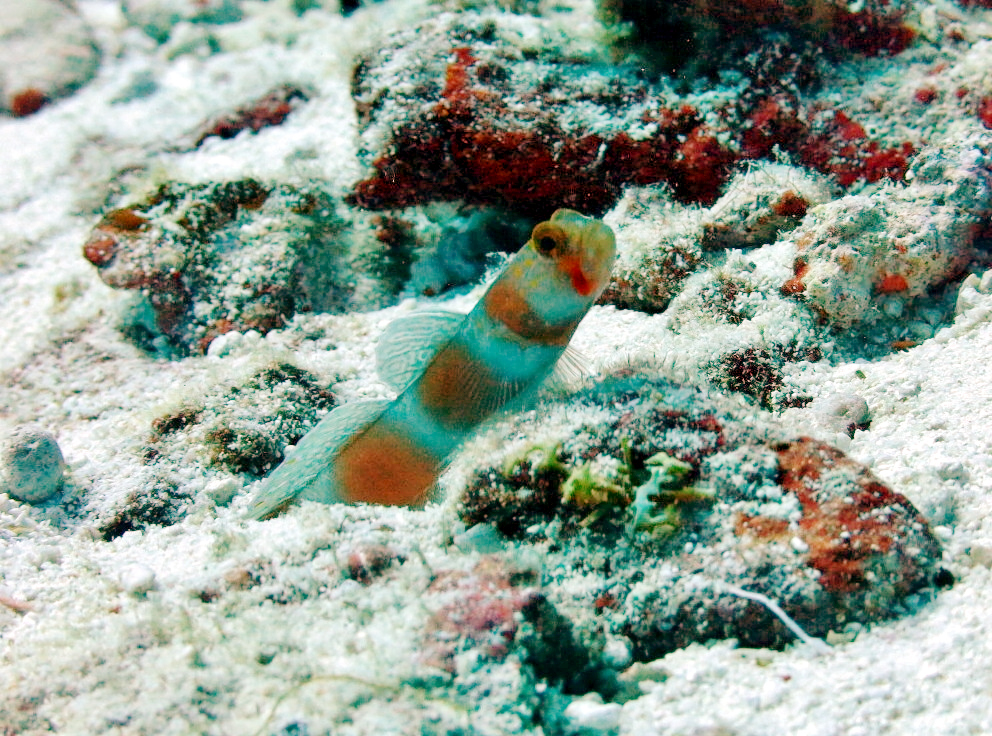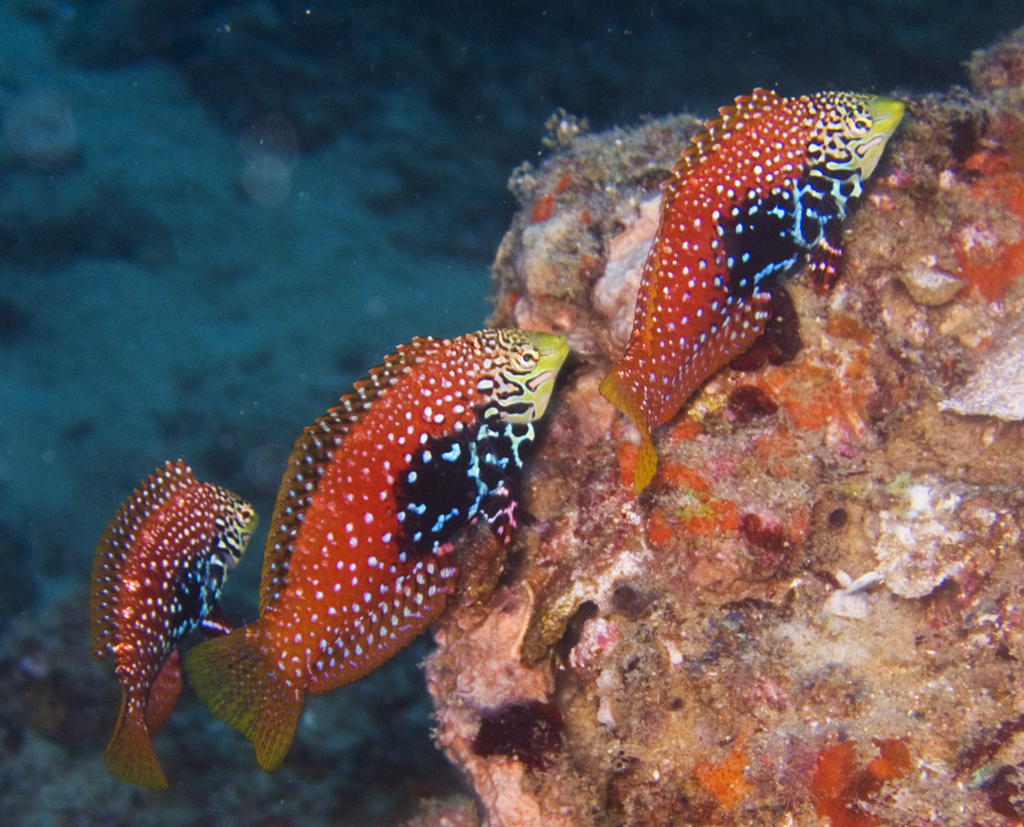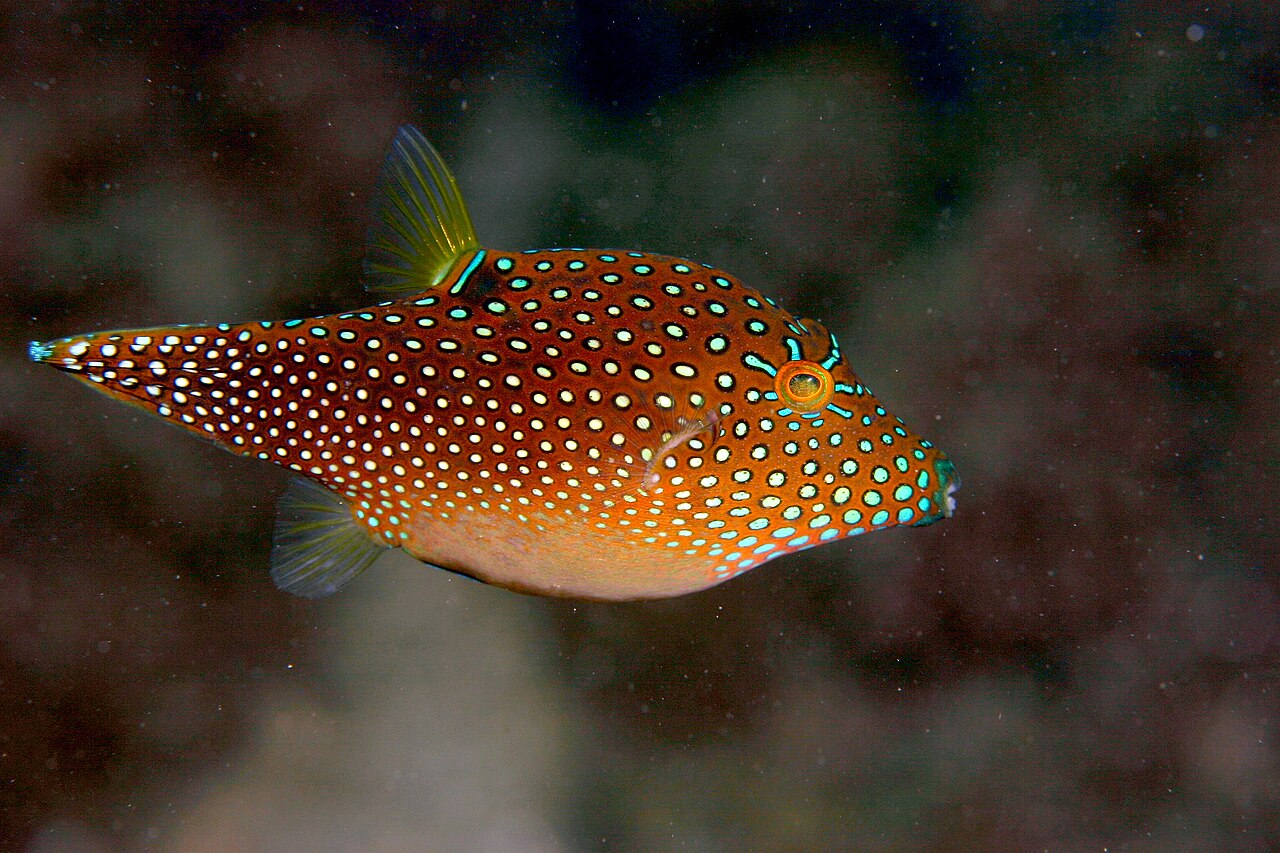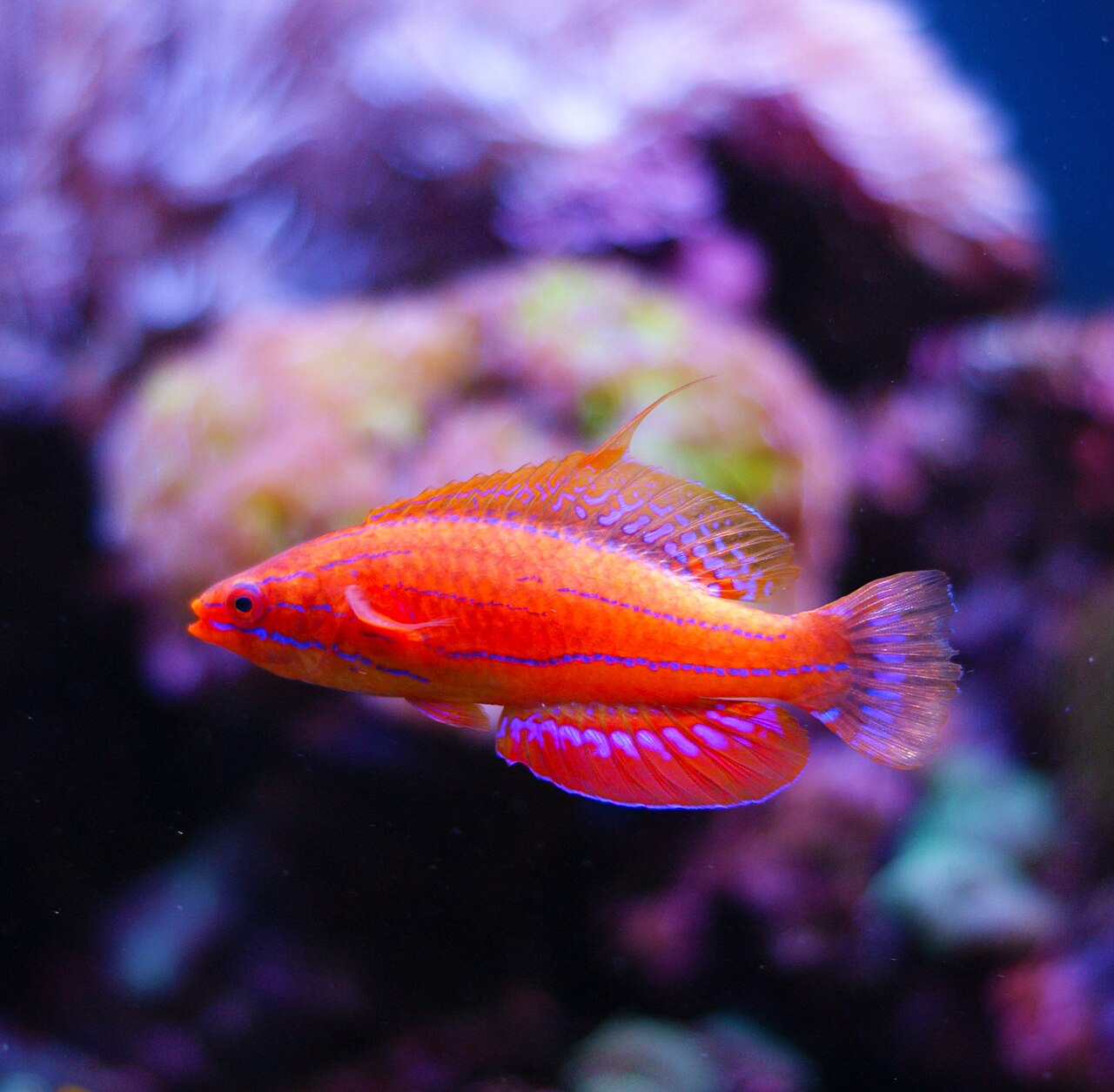
Nebulous Wrasse
A hardy working wrasse that hunts pests all day long.
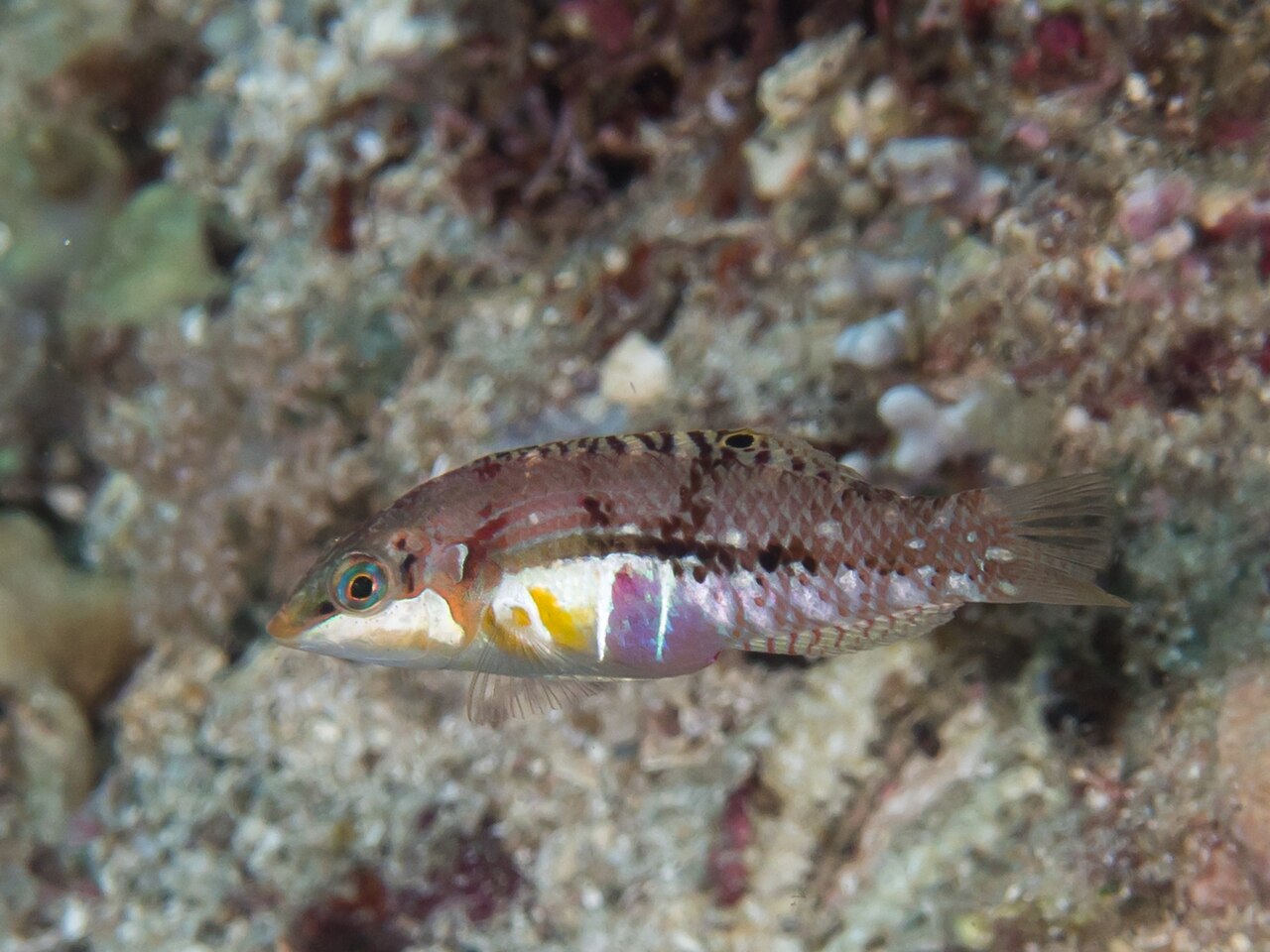
Mottled green, rose, and gold patterning over a compact body. The nebulous wrasse is one of the best pest-control fish available — it actively hunts pyramidellid snails, bristle worms, and flatworms across the rockwork while staying entirely coral-safe. Hardy, always eating, and constantly in motion.
Photo: Foto: Rickard Zerpe, CC BY 2.0, via Wikimedia Commons
Local pickup by appointment · Venmo · CashApp · Zelle · PayPal · Cash — Recogida local con cita previa · Venmo · CashApp · Zelle · PayPal · Efectivo — message us on WhatsAppescríbenos por WhatsApp
What it needs to thrive
- Lighting
- Any standard reef lighting — no special requirements.
- Flow
- Moderate reef flow with calm resting zones.
- Feeding
- Meaty frozen foods twice daily plus whatever it hunts off the rock.
- Temperament
- Peaceful with fish and corals; not safe with tiny ornamental inverts.
- Difficulty
- Beginner
- Ideal Tank Size
- 50 gallons and up with sand and rock.
- Water Parameters
- 76–80°F · salinity 1.024–1.026 SG · pH 8.1–8.4 · 0 ammonia / 0 nitrite · nitrate under 10 ppm
Fine sand bed at least two inches deep for nightly burrowing, plus live rock for hunting.
Peaceful toward fish, coral safe. Will eat ornamental shrimp and small snails.
Quarantine, dip, and acclimation
Quarantine
Hold all new fish in a bare-bottom 10–20 gallon QT for a minimum of 4 weeks. Observe for flashing, clamped fins, white spots, or breathing changes. Treat preventatively with copper (1.75–2.5 ppm chelated) or tank-transfer method for ich, plus a praziquantel course for flukes. Invertebrates and corals skip QT but go through dip and observation instead.
Recommended coral dip
For every new coral: a 5–10 minute bath in your reef-safe dip of choice (Bayer Complete, CoralRx, or Reef Primer) following label dosage, followed by two clean saltwater rinses. Inspect plugs and bases for flatworms, pyramid snails, and eggs — remove or refrag onto clean plugs before placing in display.
Acclimation
Float sealed bags in your QT or display for 15 minutes to match temperature. Then drip acclimate at 2–4 drops per second for 45–60 minutes until volume has tripled. Net livestock into the tank — never pour shipping water in. Dim the lights for the first 24 hours to reduce stress.