McCosker's Flasher Wrasse
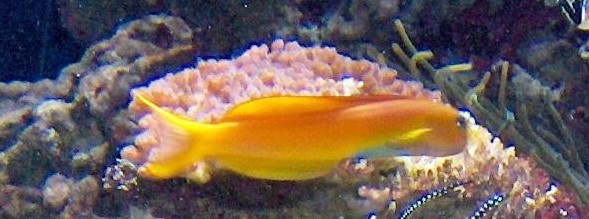
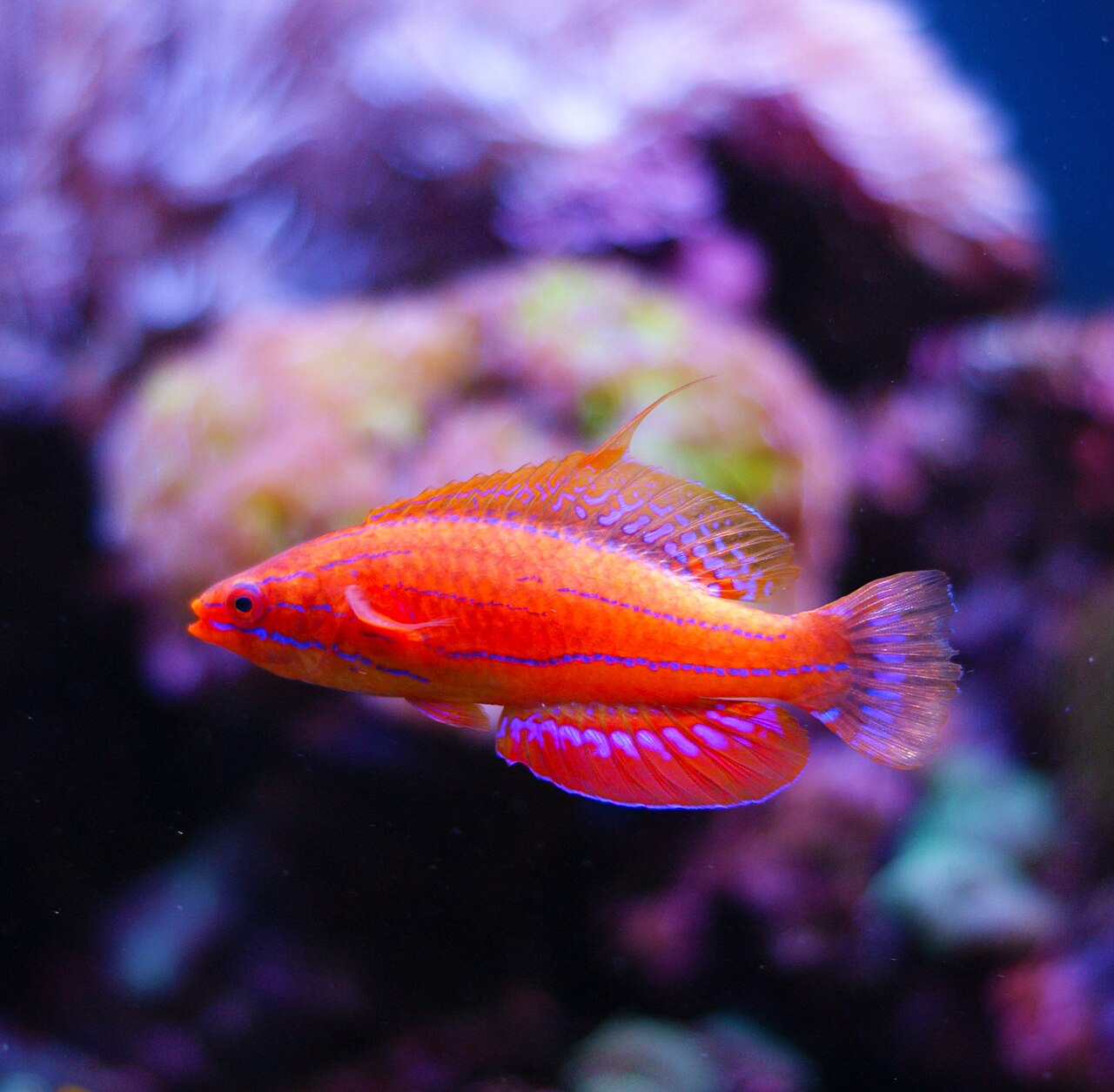
Males flare into neon orange, blue, and magenta when they display.
A small, peaceful reef wrasse that spends the day hovering in mid-water and the evening flashing — males intensify into vivid orange and electric blue while flaring their fins. Hardy, reef safe, and one of the best ways to add constant color and movement without any risk to corals or clean-up crew.
Reference image — cultivar may vary.Imagen de referencia — el cultivar puede variar.
Photo: Foto: Gdiggers, CC BY-SA 3.0, via Wikimedia Commons
Local pickup by appointment · Venmo · CashApp · Zelle · PayPal · Cash — Recogida local con cita previa · Venmo · CashApp · Zelle · PayPal · Efectivo — message us on WhatsAppescríbenos por WhatsApp
What it needs to thrive
- Lighting
- Any standard reef lighting — no special requirements.
- Flow
- Moderate reef flow with calm resting zones.
- Feeding
- Small meaty foods 2–3× daily — enriched mysis, calanus, and quality pellets.
- Temperament
- Peaceful and reef safe. Safe with corals, shrimp, and snails.
- Difficulty
- Beginner
- Ideal Tank Size
- 40 gallons and up with a secure lid.
- Water Parameters
- 76–80°F · salinity 1.024–1.026 SG · pH 8.1–8.4 · 0 ammonia / 0 nitrite · nitrate under 10 ppm
Open water above the rockwork. Needs a tight-fitting lid — flasher wrasses are notorious jumpers.
Peaceful and fully reef safe. Keep one male with several females, or a single specimen in smaller tanks.
Quarantine, dip, and acclimation
Quarantine
Hold all new fish in a bare-bottom 10–20 gallon QT for a minimum of 4 weeks. Observe for flashing, clamped fins, white spots, or breathing changes. Treat preventatively with copper (1.75–2.5 ppm chelated) or tank-transfer method for ich, plus a praziquantel course for flukes. Invertebrates and corals skip QT but go through dip and observation instead.
Recommended coral dip
For every new coral: a 5–10 minute bath in your reef-safe dip of choice (Bayer Complete, CoralRx, or Reef Primer) following label dosage, followed by two clean saltwater rinses. Inspect plugs and bases for flatworms, pyramid snails, and eggs — remove or refrag onto clean plugs before placing in display.
Acclimation
Float sealed bags in your QT or display for 15 minutes to match temperature. Then drip acclimate at 2–4 drops per second for 45–60 minutes until volume has tripled. Net livestock into the tank — never pour shipping water in. Dim the lights for the first 24 hours to reduce stress.