Anubias nana 'Golden' — Clump
A bright chartreuse Anubias clump for shaded wood and stone.
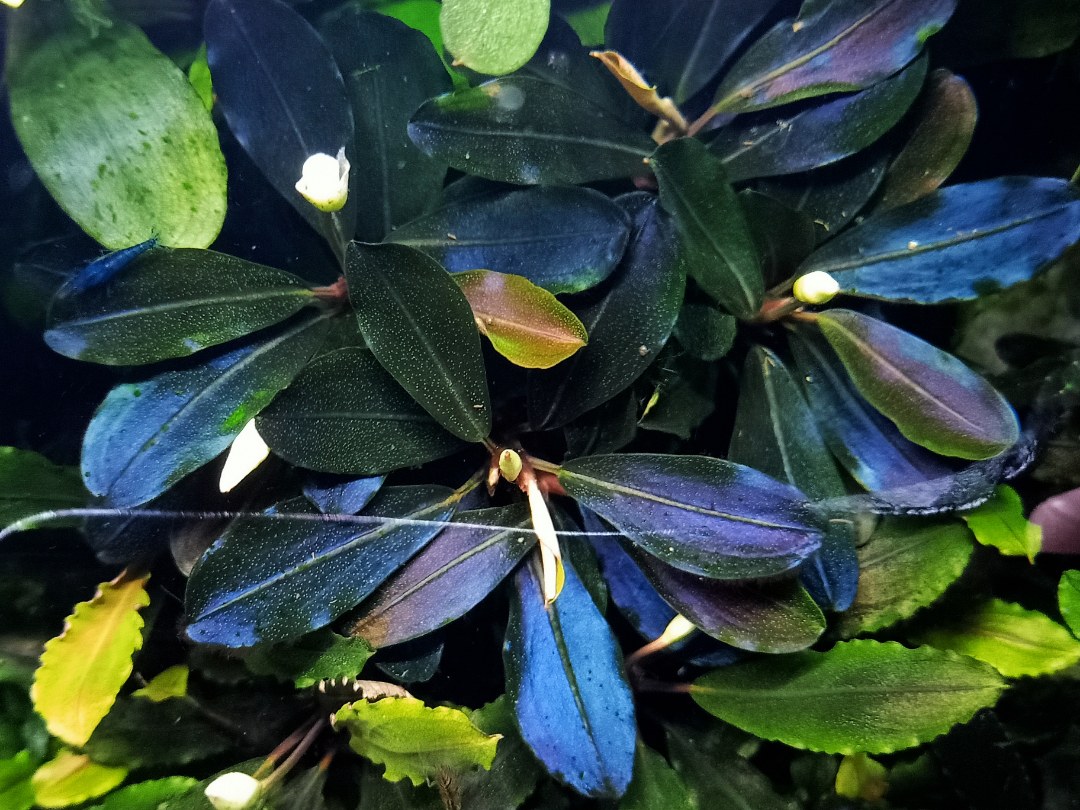
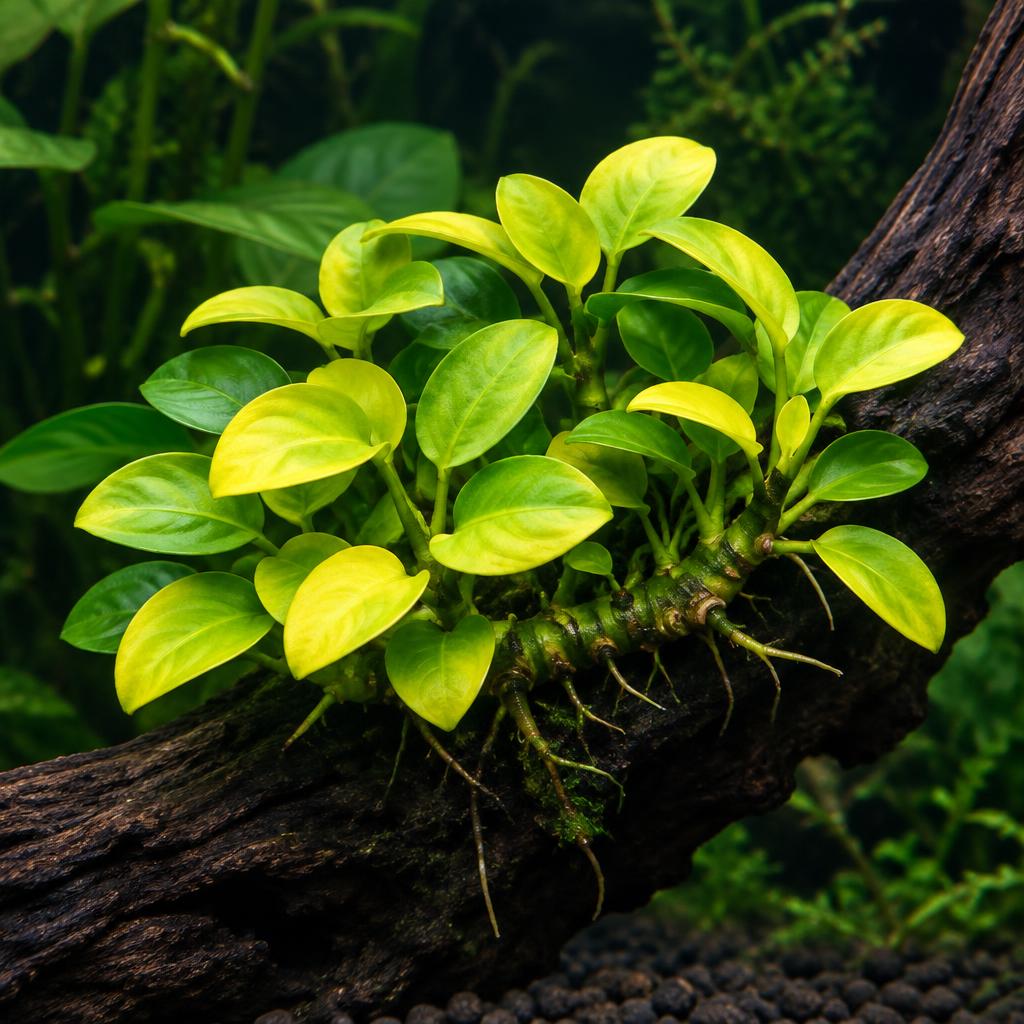
Golden Nana keeps the durable, compact habit of Anubias nana with lighter lime-to-gold foliage. The photo shows the standard green form as a structural reference; exact coloration varies with growing conditions.
Reference image — cultivar may vary.Imagen de referencia — el cultivar puede variar.
Local pickup by appointment · Venmo · CashApp · Zelle · PayPal · Cash — Recogida local con cita previa · Venmo · CashApp · Zelle · PayPal · Efectivo — message us on WhatsAppescríbenos por WhatsApp
What it needs to thrive
- Lighting
- Low to moderate light. Avoid excessive intensity on slow-growing leaves.
- Flow
- Gentle to moderate flow that keeps debris off the leaves and rhizome.
- Feeding
- Feeds mainly from the water column; use a complete liquid fertilizer sparingly.
- Temperament
- Peaceful, shrimp-safe, and suitable for planted community aquariums.
- Difficulty
- Beginner
- Ideal Tank Size
- 10 gallons and up
- Water Parameters
- 70–80°F · pH 6.0–7.5 · soft to moderately hard water · 0 ammonia / 0 nitrite
Attach the clump to hardscape and leave every rhizome exposed.
Quarantine, dip, and acclimation
Quarantine
Hold all new fish in a bare-bottom 10–20 gallon QT for a minimum of 4 weeks. Observe for flashing, clamped fins, white spots, or breathing changes. Treat preventatively with copper (1.75–2.5 ppm chelated) or tank-transfer method for ich, plus a praziquantel course for flukes. Invertebrates and corals skip QT but go through dip and observation instead.
Recommended coral dip
For every new coral: a 5–10 minute bath in your reef-safe dip of choice (Bayer Complete, CoralRx, or Reef Primer) following label dosage, followed by two clean saltwater rinses. Inspect plugs and bases for flatworms, pyramid snails, and eggs — remove or refrag onto clean plugs before placing in display.
Acclimation
Float sealed bags in your QT or display for 15 minutes to match temperature. Then drip acclimate at 2–4 drops per second for 45–60 minutes until volume has tripled. Net livestock into the tank — never pour shipping water in. Dim the lights for the first 24 hours to reduce stress.