Riccia fluitans
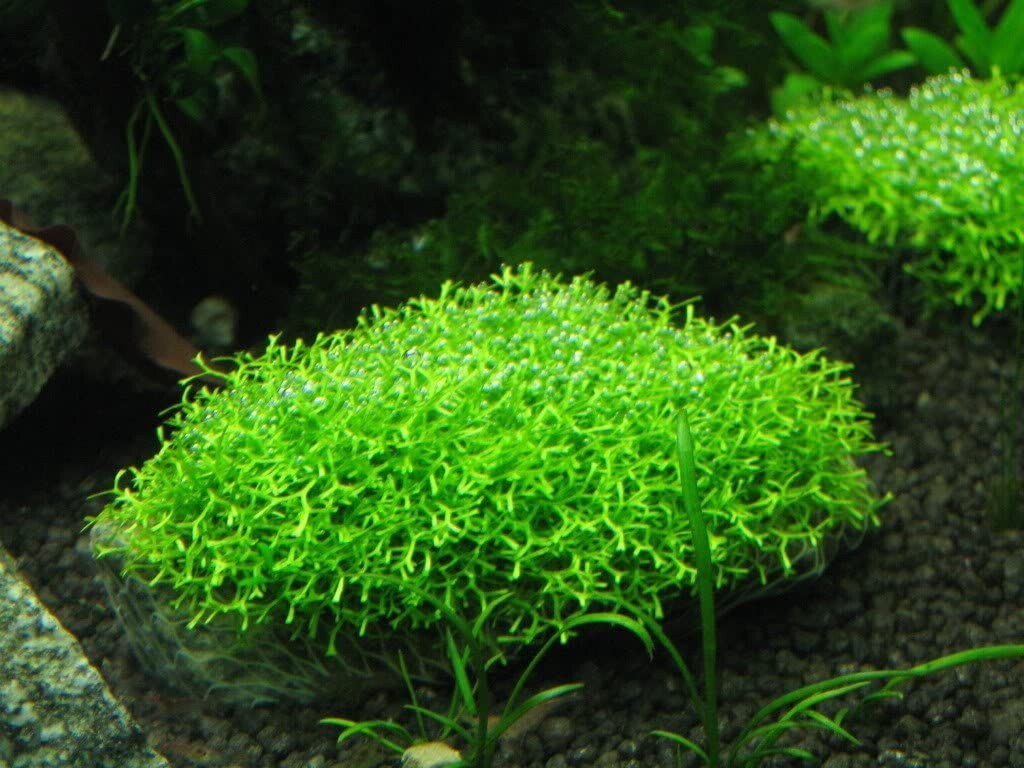
The pearling plant — a carpet of oxygen bubbles suspended in bright green lace.
Riccia is a floating liverwort with no roots at all, made famous by Amano's stone-tied carpets. Under strong light and CO2 it pearls harder than any plant in the hobby, releasing a constant stream of oxygen bubbles trapped in its dense forked structure. Farm-raised in clean water and shipped as a generous portion, enough to tie down several stones or float as a fry refuge.
What it needs to thrive
- Lighting
- Moderate to high — 50–90 PAR. Pearling and dense growth need real light.
- Flow
- Moderate flow to keep the mat clean and supplied with CO2.
- Feeding
- Column and root feeder — dose a complete liquid fertilizer weekly; root tabs for heavy substrate rooters.
- Temperament
- Peaceful — shrimp-safe, fry-safe, and grown pesticide-free.
- Difficulty
- Intermediate
- Ideal Tank Size
- 5 gallons and up
- Water Parameters
- 70–80°F · pH 6.0–7.5 · GH 3–10 · KH 1–8 · nitrate 10–25 ppm with a complete liquid fertilizer
Tie to flat stone with cotton thread or mesh for a foreground carpet, or float it as instant shrimp and fry cover.
Peaceful. Requires regular trimming — untrimmed mats detach and float to the surface.
Quarantine, dip, and acclimation
Quarantine
Hold all new fish in a bare-bottom 10–20 gallon QT for a minimum of 4 weeks. Observe for flashing, clamped fins, white spots, or breathing changes. Treat preventatively with copper (1.75–2.5 ppm chelated) or tank-transfer method for ich, plus a praziquantel course for flukes. Invertebrates and corals skip QT but go through dip and observation instead.
Recommended coral dip
For every new coral: a 5–10 minute bath in your reef-safe dip of choice (Bayer Complete, CoralRx, or Reef Primer) following label dosage, followed by two clean saltwater rinses. Inspect plugs and bases for flatworms, pyramid snails, and eggs — remove or refrag onto clean plugs before placing in display.
Acclimation
Float sealed bags in your QT or display for 15 minutes to match temperature. Then drip acclimate at 2–4 drops per second for 45–60 minutes until volume has tripled. Net livestock into the tank — never pour shipping water in. Dim the lights for the first 24 hours to reduce stress.